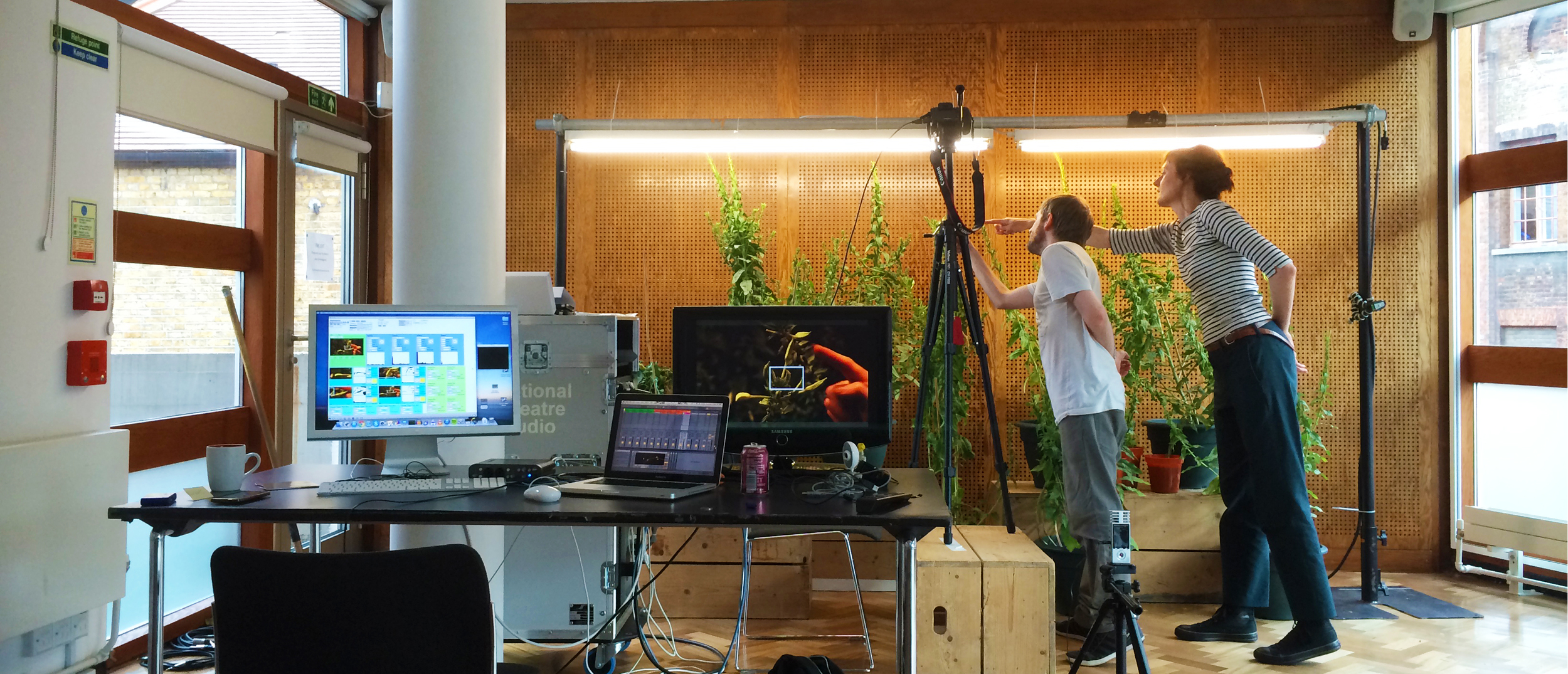
Here are my first experiments into mapping movement to sound using an Xbox Kinect, Max and Ableton Live. I’m hoping to develop this tech into performance software to be used on stage, primarily for dancers and performers to accompany themselves, using their own movement as a sound controller.
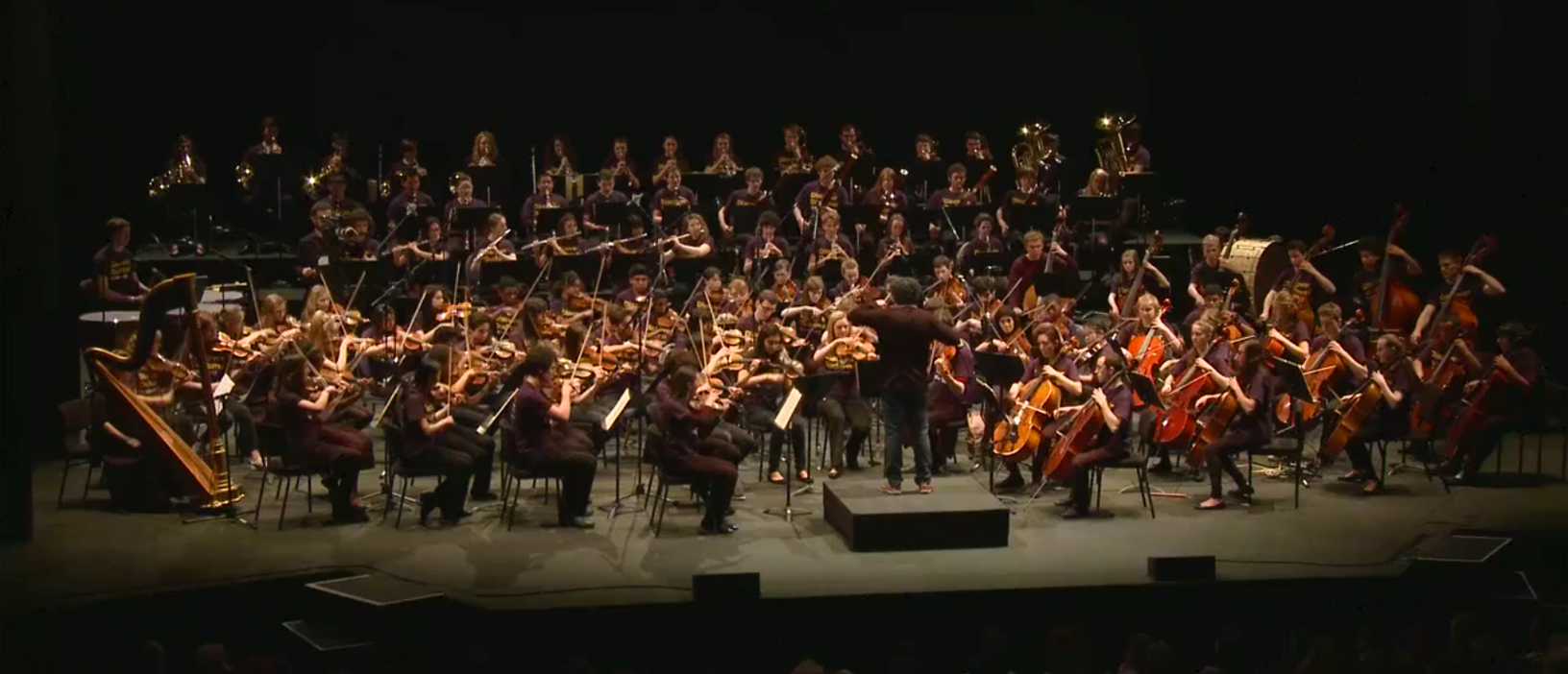
I’ve been working for over 6 months as the technical coordinator in the Creative Learning department of the Barbican Centre in London. I recently had the opportunity to work on a project bringing together over 100 young orchestral players in east London with one of the leading maestros of classical music. Gustavo Dudamel is the conductor and musical director for the LA Philharmonic and during his residency at the Barbican we took the opportunity to arrange an open rehearsal to gain an insight into his processes, and to create an extraordinary opportunity for the young musicians we work with across London.
I took on the role of technical manager for this project, overseeing and arranging the stage planning, lighting, multitrack recording and sound mixing of the orchestra.
I’ve always been interested in the relationship between movement and sound, particularly in terms of using the body as a control source for music software. After scratching the surface of interactive system design when studying at university, I decided to start a new project to expand my skills in both DIY electronics and motion sensor technology. My aim was to create a system where moving my hand in open space could control sound parameters in different ways.
I first started repairing electronic equipment when working as a technician at Northbook college. This soon turned into ‘hacking’, after realising that my soldering skills could be put to more creative uses. I began by buying an old radio from a flea market, removing the internal amplifier components to make some room, and installed a small 5 watt mono amplifier I purchased from an electronics store. With a little re-wiring of the headphone jack I was now able to send my own sounds through my radio.
I bought an Arduino microcontroller and started to explore different sensors I could connect to it. Arduino is an open source prototyping platform that has become popular in recent years among hobbyist electronics makers and inventors for it’s ease of use interface and simple programming language, along with a strong online community waiting to give you a helping hand at every hurdle you come across.
I started to work with an LDR (light dependant resistor) connected to the Arduino and followed a useful tutorial to help me get started. I then created a basic circuit using the sensor, creating a continuous stream of data depending on how much light it detected on it’s surface.
I then started to think about how I could use this data to interact with my audio software, specifically Ableton Live. I did some research and found a dedicated Max/MSP patch called Maxuino which enables direct communication with the Arduino board and my Max software. Next I built my own patch to take the information I received from moving my hand in front of the light resistor, to turn it into useful MIDI information I could send into my favourite DAW to control my instruments and effects! For all you budding makers out there, here’s a video of exactly how I did it.
I was lucky enough to be invited onto You’ll Soon Know’sNTS radio show with The Grinel from the Donky Pitch label. We saw it as a great excuse to talk about lots of new releases and for me, to play a whole host of new tracks for the first time. Here’s some highlights from my set featuring live vocoder and synth guitar action.
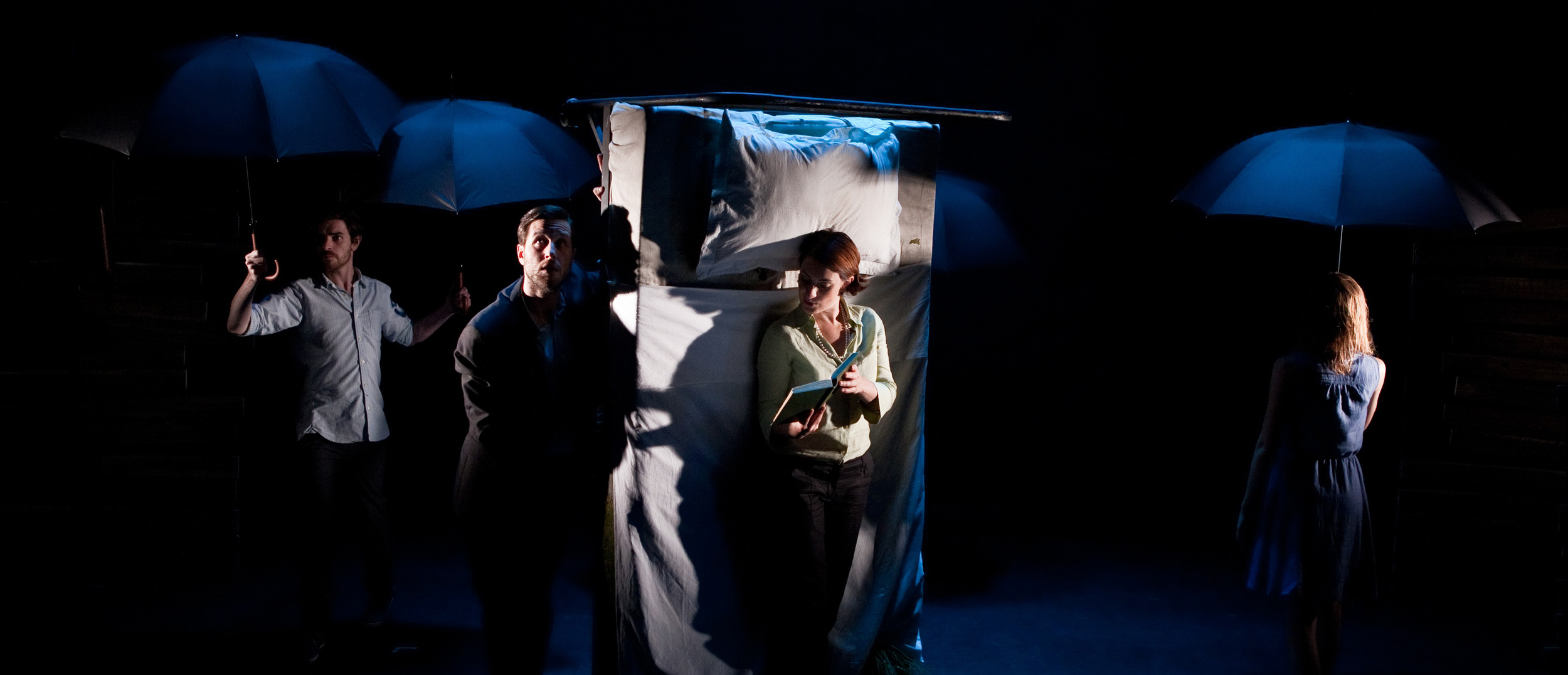
In August 2012 I was invited to join The Unhidden Collective in a week long creative lab session at the Barbican Centre. The group contained dancers, singers, a documentary film maker and a visual artist looking to create a multi disciplinary performance piece. Working as sound designer, collectively we started playing with ideas on what was later to become “The Fish Tales of Alaska”, culminating in a three week run at The Yard theatre in Hackney.
It gave me the opportunity to work with the fantastic “Goodbye Leopold”, an acapella group from east London that use some unusual techniques such as singing backwards when composing.
When designing the sound for this piece I spent a lot of time sourcing and recording sounds of the sea, bells, weather reports and storms. I wanted to bring out the ethereal quality, character and personality of the sea; a theme I felt would run strong throughout the piece.
I also took influence from traditional Tlinglit alaskan music, using drum patterns, instrumentation and folk influences to create a simple theme for our fisherman character. This needed to be delicate and have a human feel while providing a sense of apprehension. I wanted to portray the slightly disquieting relationship the fisherman feels he has with the sea.
I also wanted to create different ways that the performers on stage could play with sound themselves. I built an interactive radio containing a light sensor and potentiometer so that the character could physically tune in and out of pre recorded radio stations, bringing an extra sense of realism to the performance. The light sensor was used to create strange effects as our character moved closer or further away from it. You can read more about this project here.
Fish Tales of Alaska had a very successful first run, and the company are looking to develop and expand on their ideas for further performances.
You can hear more extracts of the songs and sounds used in the piece below.
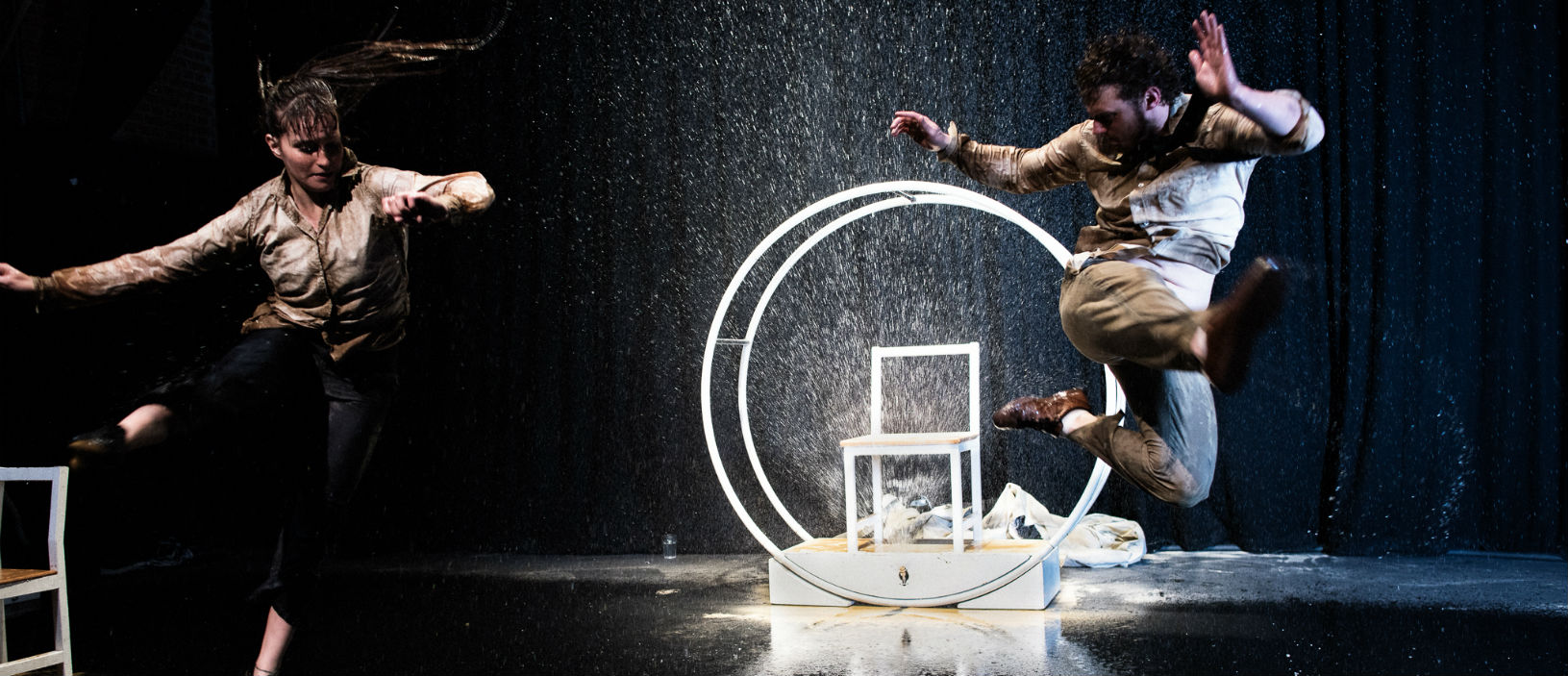
Death and Gardening is a physical comedy exploring the human instinct to reject death. I was luck enough to work with Wet Picnic Theatre from the inception of this project over two years ago. I was invited by director Matt Feerick to join the company throughout the devising process for this piece, spending weeks at a time with the whole company at their creative hub in Eastleigh in Hampshire. The company wanted sound and music to be an integral part of the show, so much so that they would often ask me to “make a sound” or “play us some random music you like”, using these ideas to start exploring characters, themes and ideas for the piece. It was great to be part of the collaborative process throughout, contributing towards the overal aesthetic through sound.
This is a theme we used for a scene where a rather comedic sexually charged nurse is trying to help the lead character come to terms with his death. We played around with it in the space, where the sound and character was developed simultaneously.
With the protagonist spending much of his time in a hospital bed, we wanted to explore ways to show the characters memories of his early life and teenage years. I created this piece using a collection of 80′s pop tracks that was used for a choreographed section of the performance.
As well as creating original music and editing existing material, I also made all the sound effects, ambiences and transitory sounds throughout the piece. Here I put together a collection of hospital noises with some recorded dialogue to bring our character in and out of his coma state and into his dream world.
After a three week tour around Hampshire and Sussex in the summer of 2012, Death and Gardening will be returning to the UK in Spring 2013.
After debuting my live set at their club night, and receiving heaps of support form the Brighton based label Donky Pitch, I was lucky enough to have the opportunity to release an EP with them.
“Better known as the Rick James of Brighton (or Ross Flight to his mates) Boss Kite has been the leading light in the UK Skweee scene for a number of years and his sexed up, rubbed down and warm productions have gained him noterity far beyond our shores.
This four track EP collects together some of his finest productions from 2011, alongside a new collaboration with the inimitable Motem. He has been a member of the Donky Pitch family since day one, having played many of our parties.”